The Origins of ClimbingNoise.com : How and why Basim Newby and Craig Hoyt created ClimbingNoise
By Amalia Wompa
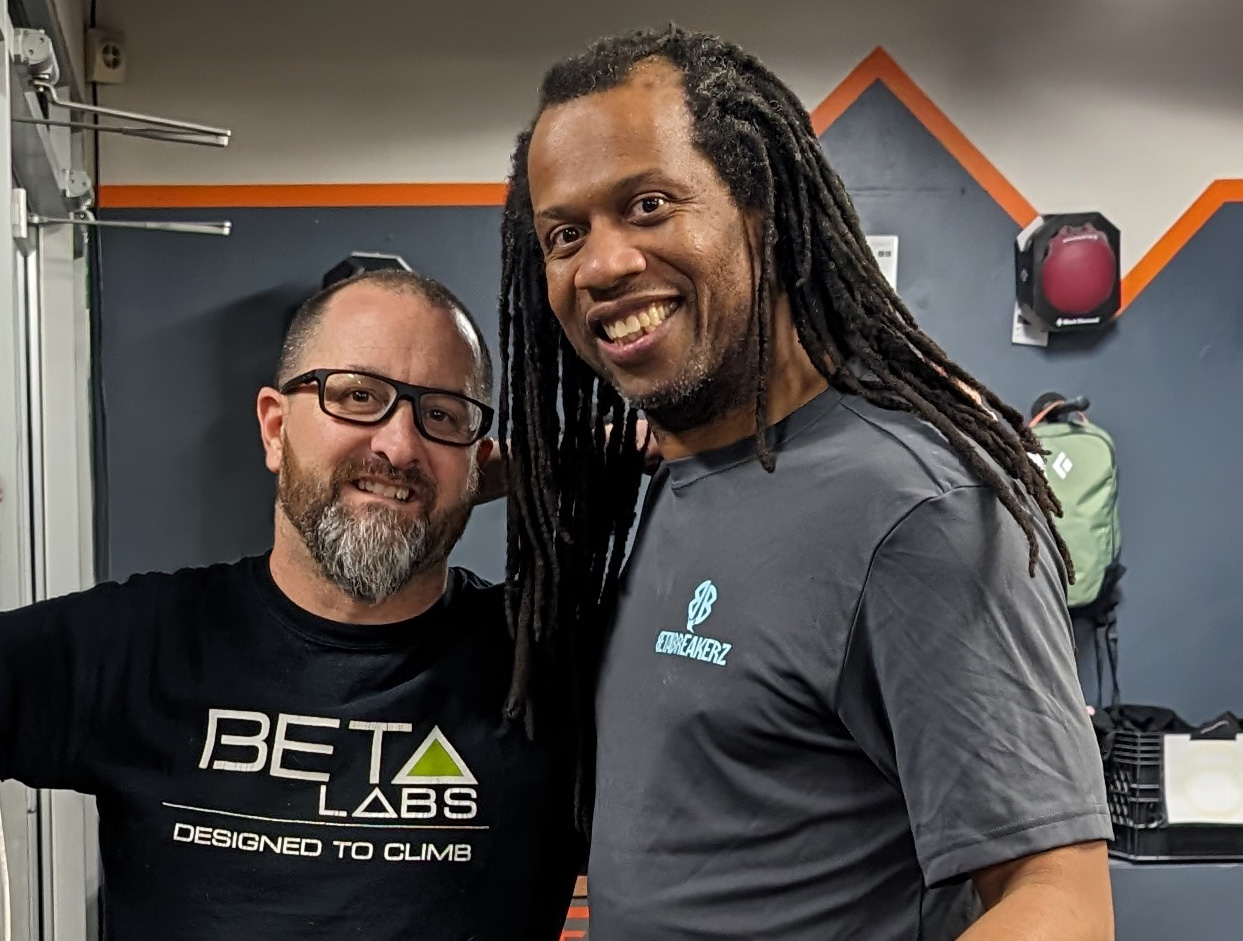
Craig Hoyt and Basim Newby pose after the annual Feats of Strength competition in Valhalla, New York, Feb. 24, 2024. (Photo courtesy of The Cliffs Valhalla)
Back in the early days of the modern climbing scene, local competitions relied heavily on gym posters and word of mouth to gain popularity. Cash prizes were few and far between, and production depended on how many employees were around — and who was confident enough to work a microphone. Now, local kids are landing sponsorships with world-renowned companies, and entire venues are being built just for collegiate competitions.
Still, despite the growing number of events, there has long been a desert when it comes to finding information about them. At least, that’s how Basim Newby and Craig Hoyt first came up with the idea for ClimbingNoise.com.
“I really think ClimbingNoise could be something,” said Craig Hoyt from Tappan who owns both BetaLabs, a climbing gear company based on needs, and Compass Sports Group, a bicycle industry consulting company. Throughout his work, Hoyt has long believed in the mission of athlete representation, particularly in climbing.
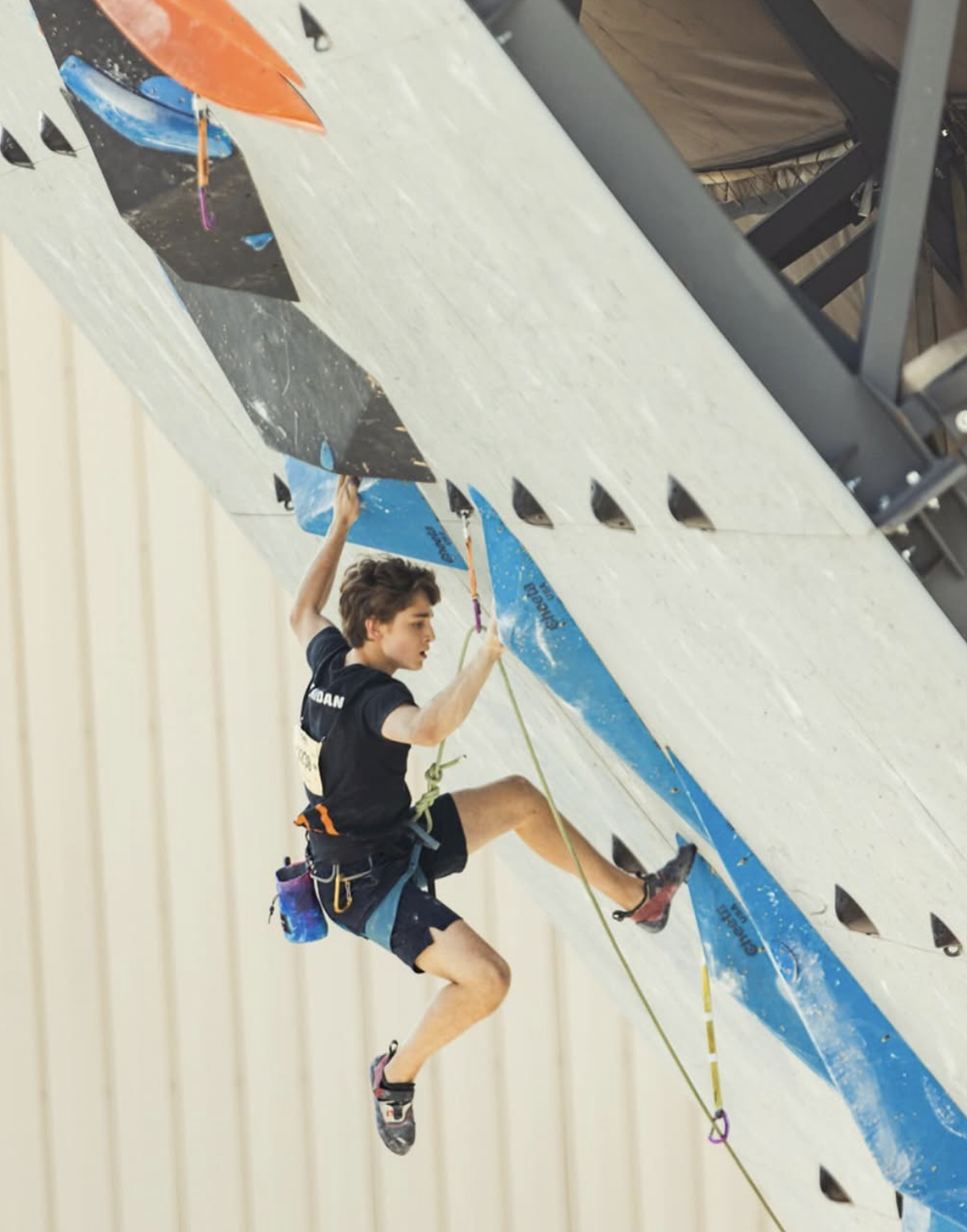
Part of his inspiration is his son, Austin, who quickly rose through the ranks of competition to become a nationally recognized climber both indoors and outdoors. He made a name for himself by reaching the finals of nearly every competition he entered, but the process of getting there was anything but seamless.
“We would always just hear about comps through the grapevine,” Hoyt said. “And me, coming from a bicycle and motorcycle racing background, there were always websites or publications advertising races throughout the region. So you knew where to go.”
This wasn’t the case for climbing.
Basim Newby, who lives in Yorktown Heights, is a technology consultant who also created BetaBreakerz, a popular YouTube and Instagram channel that livestreams competitions and interviews the athletes who compete in them. As his following grew, Newby encountered the same difficulty as Hoyt.
“I was livestreaming all of these competitions and competing at them, and the one thing people would always ask me was, ‘Where is the next comp?’”
It was after a Dark Horse Bouldering Series livestream at MetroRock Littleton in 2023 that Newby and Hoyt casually spoke about the challenges of keeping up with current climbing events in the area. Hoyt spilled his frustrations to Newby in the buzzing hectic-ness of a gym after a competition.
“He told me, ‘I could probably build that in like an hour,’” Hoyt said of Newby’s willingness to try.
Combining Hoyt’s sports business background with Newby’s technical skills, ClimbingNoise was born, which finally created a central site of reference for as many competitions as possible, paired with direct links to their registration pages.
In the last 90 days as of early March, Newby said the site recorded about 16,000 clicks and 1,800 active users. Those visitors could sign up for everything from a local competition in New Jersey to an outdoor climbing festival in Bishop, California.
“From October through May is the prime season for people looking, and then it kind of shifts,” Newby said.
At first glance, the model of ClimbingNoise seems simple: gyms submit event details to the site before Newby approves and posts them. Still, there are hidden barriers — the first being that nothing is automatic. Newby manually edits everything from the format to the thumbnails. With new competitions submitted everyday, it’s difficult to keep up, and even more difficult to keep expanding the site’s broader goals simultaneously.
“I really want more editorial and stories and podcasts on it eventually,” Hoyt said. “If we could follow up comps with results the next day, that would be huge.”
One of Hoyt’s goals is to attend competitions with both content and results in mind, interviewing athletes before and after events — almost like a press conference. The approach could be especially eye-opening for youth competitors, giving them the kind of attention athletes their age in other extreme sports have received for decades.
Newby also mentioned the possibility of expanding internationally, though the main challenge would be translating languages that don’t easily convert into English for the site.
“There are so many ideas that could help climbing reach more people,” Hoyt said.
The evolution of ClimbingNoise itself shows how a gap in a community can be filled through time and innovation. Climbing media still has room to grow, but with people like Hoyt and Newby pushing it forward, the future of how competitions are covered, especially on the East Coast, is still being written.
Subscribe to our newsletter